
IT Band Syndrome: A Comprehensive Guide to Stretches & Recovery
IT Band Syndrome presents as sharp, burning knee pain, often linked to new exercise routines or post-surgery recovery; exploring effective exercises is key.
Understanding IT Band Syndrome
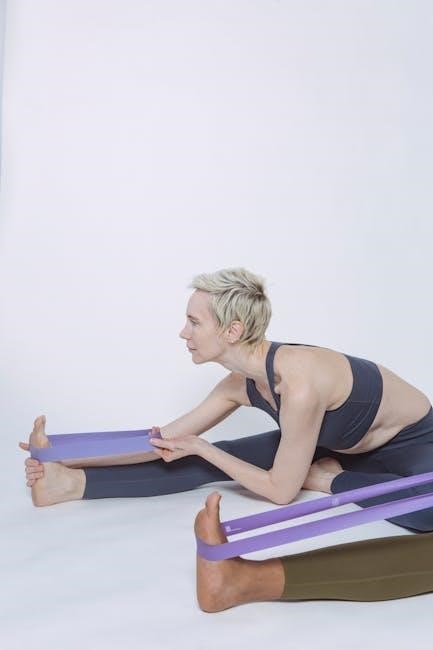
IT Band Syndrome (ITBS) is a common ailment, particularly among runners and athletes, manifesting as pain on the outer knee. This discomfort arises from friction between the iliotibial (IT) band – a thick band of tissue running along the thigh – and the lateral femoral epicondyle of the knee. While often called a “syndrome,” it’s frequently an overuse injury, not necessarily inflammation of the IT band itself, but rather irritation of the structures underneath it.
The pain can radiate up the thigh or down the leg. Contributing factors include improper training techniques, inadequate warm-up, muscle imbalances (weak hips and glutes), and anatomical variations. Understanding these underlying causes is crucial for effective treatment and prevention, often involving targeted stretching and strengthening exercises. Seeking guidance from a healthcare professional is recommended for accurate diagnosis and a personalized recovery plan.
What is the Iliotibial (IT) Band?
The iliotibial (IT) band is a robust band of fibrous tissue extending from the hip to just below the knee on the outside of the thigh. It’s not a muscle, but a thick tendon-like structure composed primarily of fascia – a connective tissue that surrounds muscles. Its primary function is to stabilize the knee during running and walking, and to assist in hip abduction and external rotation.
Originating at the iliac crest and attaching near the tibial tuberosity, the IT band plays a vital role in lower limb mechanics. While naturally quite strong, it can become tight or restricted, leading to friction and pain when it rubs against bony prominences during movement. Understanding its anatomy and function is essential for comprehending how IT Band Syndrome develops and how targeted exercises can provide relief.
Causes of IT Band Syndrome
IT Band Syndrome typically arises from repetitive friction between the IT band and the lateral femoral epicondyle – the bony prominence on the outside of the knee. This friction often stems from several contributing factors, including muscle imbalances, particularly weakness in the hip abductors (gluteus medius) and external rotators. Tightness in the IT band itself, though often blamed, is usually a result of the underlying issues, not the primary cause.
Increased exercise intensity or volume, such as rapidly increasing running mileage, can also trigger the condition. Improper biomechanics, like overpronation (inward rolling of the foot), and inadequate warm-up or cool-down routines contribute significantly; Post-surgical knee conditions or total knee replacements can also predispose individuals to ITBS due to altered movement patterns.
Symptoms of IT Band Syndrome
The hallmark symptom of IT Band Syndrome is a sharp or burning pain on the outside of the knee. This pain often develops gradually during activity, like running or cycling, and may initially subside with rest. However, as the condition progresses, pain can become more persistent and even occur at rest. Individuals might experience a snapping sensation as the IT band rubs over the femoral epicondyle.
Pain typically worsens with downhill running, stairs, or prolonged standing. Swelling or tenderness may be present just above the knee joint. The pain can sometimes radiate up the thigh, mimicking other conditions. Early intervention is crucial; ignoring symptoms can lead to chronic pain and limit exercise participation.

Diagnosis & Assessment
Accurate diagnosis involves a thorough physical examination, ruling out other potential causes of knee pain, and understanding activity-related symptom patterns.
Physical Examination for ITBS
A comprehensive physical examination is crucial for diagnosing IT Band Syndrome (ITBS). Healthcare professionals will begin by taking a detailed history of your symptoms, including when the pain started, what activities aggravate it, and its specific location. The examination typically involves palpating along the IT band to identify areas of tenderness.
Specific tests, like the Ober’s test, are performed to assess IT band tightness. This test involves lying on your side and bringing your leg into abduction and extension; a positive test indicates a tight IT band. The examiner will also evaluate your hip strength, particularly hip abductors and external rotators, as weakness in these muscles can contribute to ITBS.
Range of motion assessments of the hip and knee are also conducted. Observing your gait and how you move during functional activities, such as walking or running, provides valuable insight into biomechanical factors potentially contributing to the condition.
Ruling Out Other Conditions
Accurately diagnosing IT Band Syndrome requires differentiating it from other conditions that can cause similar knee pain. Meniscal tears, a common knee injury, often present with clicking, locking, or a feeling of instability, unlike the burning pain typical of ITBS. Osteoarthritis, characterized by joint degeneration, usually involves pain with weight-bearing and stiffness.
Patellofemoral pain syndrome (PFPS), or “runner’s knee,” can mimic ITBS, but the pain is typically located more anteriorly around the kneecap. Stress fractures, though less common, should be considered, especially in athletes with a sudden increase in training intensity.
A thorough medical history and physical examination, alongside imaging studies like X-rays (to rule out fractures) or MRI (to assess soft tissues), are often necessary to ensure an accurate diagnosis and appropriate treatment plan. Correctly identifying the root cause is vital for effective recovery.

Stretching Exercises for IT Band Syndrome
Effective IT Band relief involves targeted stretches like forward folds, wall stretches, and consistent foam rolling to release tension and improve flexibility.
Standing IT Band Stretch
To perform the Standing IT Band Stretch, begin by standing upright with your affected side facing away from a wall or stable support. Cross the affected leg behind the other, creating a slight crossover. Lean your body towards the support, keeping your back straight and core engaged.
You should feel a stretch along the outside of your hip and thigh. Hold this position for approximately 30 seconds, ensuring you maintain a consistent, gentle stretch. Avoid bouncing or jerking movements. Repeat this stretch 2-3 times on each side.
This stretch effectively targets the IT Band, helping to alleviate tension and improve flexibility. Remember to listen to your body and stop if you experience any sharp pain. Consistent practice can contribute significantly to managing IT Band Syndrome symptoms.
Wall IT Band Stretch
The Wall IT Band Stretch is a gentle yet effective way to target tension in the iliotibial band. Stand sideways to a wall, with the affected leg closest to the wall. Extend that leg straight out, and place your hand on the wall for support.
Cross your other leg behind the extended leg, keeping your feet flat on the floor. Gently lean your hips towards the wall, maintaining a straight back and engaged core. You should feel a stretch along the outside of your hip and thigh.
Hold this position for 30 seconds, repeating 2-3 times per side. Avoid overstretching or forcing the movement. This stretch, combined with others, can significantly aid in IT Band Syndrome recovery and prevention.
Foam Rolling the IT Band
Foam rolling the IT Band is a self-myofascial release technique to alleviate tension and improve flexibility. Begin by lying on your side with the foam roller positioned under your outer thigh, just above the knee. Support your body weight with your forearm and top leg.
Slowly roll from just above the knee to the hip, pausing on any tender spots for 20-30 seconds. This can be uncomfortable, but should not be excruciating. Controlled, deliberate movements are key; avoid rapid rolling.
Repeat this process for 1-2 minutes on each leg. Foam rolling, alongside stretching, helps address muscle imbalances contributing to IT Band Syndrome, promoting recovery and preventing future issues. Remember to breathe deeply throughout the exercise.
Hip Flexor Stretch
A tight hip flexor can contribute to IT Band Syndrome by altering biomechanics and increasing stress on the IT Band. To perform a hip flexor stretch, kneel on one knee with the other foot flat on the floor in front of you, forming a 90-degree angle.
Gently lean forward, keeping your back straight and core engaged, until you feel a stretch in the front of your hip of the kneeling leg. Avoid arching your lower back. Hold this position for 20-30 seconds, repeating 2-3 times on each side.
This stretch helps restore proper hip alignment and reduce tension, supporting overall IT Band health and alleviating symptoms. Consistent stretching is crucial for long-term relief and prevention.
Glute Stretch (Piriformis Stretch)
Tight gluteal muscles, particularly the piriformis, can irritate the sciatic nerve and contribute to IT Band Syndrome due to altered movement patterns. To perform a piriformis stretch, lie on your back with your knees bent and feet flat on the floor.
Cross your right ankle over your left knee. Gently pull your left thigh towards your chest, holding behind your thigh or over your shin. You should feel a stretch in your right gluteal region.
Hold this position for 20-30 seconds, repeating 2-3 times on each side. This stretch releases tension in the piriformis muscle, improving hip mobility and reducing strain on the IT Band, aiding recovery.

Strengthening Exercises for IT Band Syndrome
Strengthening hip muscles is crucial; correcting common causes like hip weakness is vital for IT Band Syndrome rehabilitation and preventing future issues.

Hip Abduction Exercises
Hip abduction exercises are foundational for addressing the underlying weakness often contributing to IT Band Syndrome. These movements focus on strengthening the gluteus medius, a key muscle responsible for stabilizing the pelvis and controlling leg movement during activities like walking and running. Weakness in this muscle can lead to altered biomechanics, increasing stress on the IT band.
A simple yet effective exercise involves lying on your side with legs straight. Slowly lift your top leg towards the ceiling, keeping your core engaged and maintaining a controlled motion. Avoid rotating your hip forward or backward. Lower the leg back down with the same control. Repeat for 10-15 repetitions on each side.
Resistance bands can be added to increase the challenge. Place the band around your ankles and perform the same lifting motion. Remember to prioritize proper form over the number of repetitions to maximize effectiveness and minimize the risk of injury.
Clamshell Exercises
Clamshell exercises are a gentle yet powerful way to strengthen the gluteus medius and external rotators of the hip – crucial muscles often implicated in IT Band Syndrome. This exercise specifically targets the muscles responsible for stabilizing the pelvis, preventing excessive inward rotation of the knee, and reducing stress on the IT band.
To perform a clamshell, lie on your side with your knees bent at a 45-degree angle and your feet stacked. Keeping your feet together, slowly lift your top knee away from the bottom knee, like opening a clamshell. Focus on squeezing your glutes throughout the movement.
Avoid arching your back or rotating your pelvis. A resistance band placed around your thighs just above the knees can increase the intensity. Perform 10-15 repetitions on each side, focusing on controlled movements and proper form. This exercise is excellent for rehabilitation.
Side Leg Raises
Side leg raises are a foundational exercise for strengthening the hip abductors, particularly the gluteus medius, a key muscle group often weak in individuals experiencing IT Band Syndrome. Strengthening these muscles helps to stabilize the pelvis and control knee movement, reducing the strain on the iliotibial band.
To execute this exercise correctly, lie on your side with your legs extended straight and stacked on top of each other. Keeping your leg straight, slowly lift your top leg towards the ceiling, maintaining control throughout the movement. Avoid rotating your hip or leaning forward or backward.
Focus on engaging your gluteal muscles to power the lift. Slowly lower your leg back to the starting position. You can add ankle weights for increased resistance as you progress. Aim for 10-15 repetitions on each side, prioritizing proper form over speed.
Glute Bridges
Glute bridges are an excellent exercise for strengthening the gluteal muscles – the gluteus maximus, medius, and minimus – which play a crucial role in stabilizing the hips and controlling lower limb movement, directly impacting IT Band Syndrome recovery; Weak glutes contribute to poor biomechanics, increasing stress on the IT band.
To perform a glute bridge, lie on your back with your knees bent and feet flat on the floor, hip-width apart. Engage your core and squeeze your glutes to lift your hips off the floor, creating a straight line from your shoulders to your knees.
Hold this position for a few seconds, focusing on the gluteal contraction, then slowly lower your hips back to the starting position. Aim for 10-15 repetitions, ensuring proper form to maximize effectiveness and prevent injury. Consider adding a resistance band around your thighs for increased challenge.

Additional Recovery Strategies

Beyond stretching and strengthening, prioritize rest, ice/heat, proper footwear, and core strength to comprehensively address IT Band Syndrome and promote healing.
Rest and Activity Modification
Rest and activity modification are foundational to recovering from IT Band Syndrome. Initially, reducing or temporarily halting activities that aggravate the pain is crucial; continuing to push through discomfort can worsen the inflammation and prolong recovery. This doesn’t necessarily mean complete inactivity, but rather a shift towards lower-impact exercises that don’t stress the IT band.
Consider alternatives like swimming, cycling with a low seat position, or elliptical training. Carefully monitor your body’s response to any activity. If pain returns, scale back the intensity or duration. Gradual reintroduction of your regular activities is key, increasing intensity slowly and listening attentively to your body’s signals. Ignoring pain will only delay healing and potentially lead to chronic issues. Prioritizing rest allows the inflamed tissues to begin the repair process.
Ice and Heat Therapy
Ice and heat therapy play complementary roles in managing IT Band Syndrome symptoms. Initially, applying ice to the affected area for 15-20 minutes several times a day helps reduce inflammation and alleviate acute pain. Always use a cloth barrier between the ice pack and your skin to prevent frostbite. After the initial inflammatory phase subsides, heat therapy can be beneficial.
Heat helps to increase blood flow to the area, promoting healing and relaxing tight muscles. Warm baths, heating pads (on a low setting), or warm compresses can be used. However, avoid heat if there’s still significant inflammation. Alternating between ice and heat can also be effective, providing both pain relief and promoting tissue recovery; Listen to your body and discontinue use if either therapy exacerbates your symptoms.

Proper Footwear and Orthotics
Proper footwear is crucial in preventing and managing IT Band Syndrome, as foot mechanics significantly impact the entire kinetic chain. Worn-out or ill-fitting shoes can contribute to overpronation or supination, increasing stress on the IT band. Choose shoes that provide adequate cushioning and support, appropriate for your foot type and activity level.
Orthotics, either custom-made or over-the-counter, can correct biomechanical imbalances in the feet. They help to align the foot and ankle properly, reducing excessive motion and strain on the IT band. If you suspect your foot structure is contributing to your ITBS, consulting a podiatrist or physical therapist for an evaluation and orthotic recommendation is highly advisable. Supportive footwear and orthotics can significantly alleviate symptoms and prevent recurrence.
Importance of Core Strength
A strong core is fundamental for stabilizing the pelvis and maintaining proper alignment during movement, directly impacting the IT band’s function. Weak core muscles can lead to compensatory movements, increasing stress on the lower body, including the IT band. Strengthening the core helps control pelvic tilt and rotation, reducing the likelihood of imbalances that contribute to IT Band Syndrome.
Exercises like planks, bridges, and abdominal stabilization drills are essential for building core strength. Integrating core work into your routine alongside IT band stretches and hip strengthening exercises provides a holistic approach to recovery and prevention. A stable core acts as a central support system, promoting efficient movement patterns and minimizing strain on the IT band and surrounding structures.

Preventing IT Band Syndrome
Warm-up and cool-down routines, gradual exercise intensity increases, and addressing muscle imbalances are crucial for preventing IT band issues and discomfort.
Warm-up and Cool-down Routines
Prioritizing dynamic stretching during warm-ups prepares muscles for activity, enhancing flexibility and reducing injury risk; consider leg swings and torso twists. A proper warm-up increases blood flow to the IT band and surrounding muscles, improving their elasticity and responsiveness. Conversely, cool-down routines featuring static stretches—holding stretches for 20-30 seconds—aid in muscle recovery and prevent post-exercise stiffness.
Forward folds and wall-supported stretches are beneficial cool-down options. Consistent implementation of these routines helps maintain IT band flexibility, minimizing friction and potential inflammation. Remember, neglecting warm-up and cool-down phases can contribute to muscle imbalances and increase susceptibility to IT Band Syndrome. Integrating these practices into your fitness regimen is a proactive step towards long-term joint health and performance.
Gradual Increase in Exercise Intensity
Abruptly escalating exercise intensity or duration places undue stress on the IT band, potentially triggering inflammation and pain; a progressive approach is crucial. Increase mileage, speed, or resistance incrementally – generally, no more than 10% per week – allowing the IT band and supporting muscles to adapt. This gradual adaptation strengthens tissues and improves their ability to withstand increased loads.
Listen attentively to your body; pain is a signal to reduce intensity or modify activity. Ignoring early warning signs can exacerbate the condition. Incorporate rest days into your training schedule to facilitate muscle recovery and prevent overuse. Combining a gradual progression with consistent stretching and strengthening exercises optimizes IT band health and minimizes the risk of developing IT Band Syndrome.
Addressing Muscle Imbalances
IT Band Syndrome frequently stems from imbalances between muscle groups, particularly weakness in the hip abductors (gluteus medius) and external rotators. These weaknesses cause the IT band to overcompensate, leading to increased friction and inflammation. Strengthening exercises targeting the glutes – such as hip abduction, clamshells, and glute bridges – are vital for restoring proper biomechanics.
Simultaneously, address tightness in hip flexors and imbalances in quadriceps strength. A comprehensive approach involves a tailored exercise program that corrects these underlying issues. Ignoring these imbalances perpetuates the cycle of pain and dysfunction. Consistent attention to strengthening weak muscles and stretching tight ones is paramount for long-term IT band health and preventing recurrence of symptoms.
Professional Guidance & Physical Therapy
Seeking guidance from a physical therapist is crucial for an accurate diagnosis and personalized treatment plan for IT Band Syndrome. A therapist can assess your specific biomechanics, identify contributing factors, and design an exercise program tailored to your needs. They’ll ensure proper form during exercises, preventing further injury and maximizing effectiveness.
Physical therapy may include manual therapy techniques to release tension in the IT band and surrounding tissues, alongside targeted strengthening and stretching exercises. Don’t self-diagnose or begin an exercise program without professional evaluation. A qualified therapist can differentiate ITBS from other conditions and guide you through a safe and effective recovery process, optimizing your return to activity.