
The Complete Hitchhiker’s Guide to the Galaxy: An Article Plan
BlaBlaCar offers affordable European travel, evolving from ride-sharing to a reliable network connecting cities. Service Canada provides automated employment insurance information 24/7.
The Hitchhiker’s Guide to the Galaxy, a comedic science fiction masterpiece, begins with a simple, yet crucial, piece of advice: Don’t Panic! This mantra encapsulates the series’ irreverent approach to the vastness and absurdity of the universe. Initially a radio comedy broadcast on BBC Radio 4 in 1978, it quickly gained a devoted following.
The story unfolds after Earth’s demolition to make way for a hyperspace bypass. Arthur Dent, an ordinary Englishman, is rescued by his friend Ford Prefect, a researcher for the titular Guide. Their journey through space is facilitated by services like BlaBlaCar, offering affordable travel, and information access through Service Canada, though perhaps not about intergalactic bureaucracy. Prepare for a wild ride filled with philosophical musings and utterly improbable events!
The Genesis of the Guide: Radio Series Origins
The Hitchhiker’s Guide to the Galaxy began life not as a novel, but as a six-part radio comedy series on BBC Radio 4 in January 1978. Douglas Adams, the creator, initially envisioned it as a more straightforward science fiction story, but it quickly evolved into the uniquely absurd and satirical work we know today. The initial concept was influenced by a desire to create something humorous and thought-provoking about humanity’s place in the cosmos.
Like planning a trip with BlaBlaCar, the series started small, building momentum with each episode. Accessing information, similar to Service Canada’s offerings, was crucial to the Guide’s function within the narrative. The radio format allowed for imaginative sound design and a focus on witty dialogue, laying the foundation for the franchise’s enduring appeal.

Douglas Adams and the BBC
Douglas Adams’s relationship with the BBC was pivotal to the creation and initial success of The Hitchhiker’s Guide to the Galaxy. He was already a script contributor for various BBC programs when he pitched the idea. The BBC provided the platform and resources for the original radio series, fostering an environment where Adams’s unique comedic voice could flourish.
Navigating the BBC bureaucracy, much like dealing with any large organization – perhaps akin to the Vogons’ red tape – presented its own challenges. However, the BBC’s willingness to take a chance on a quirky, unconventional comedy proved fruitful. Similar to how BlaBlaCar connects travelers, the BBC connected Adams’s vision with a receptive audience, and like Service Canada, it provided a vital service – broadcasting entertainment.
The Initial Broadcasts and Reception
The first series of The Hitchhiker’s Guide to the Galaxy aired on BBC Radio 4 in 1978, initially as a somewhat unassuming eight-part program. Its reception was initially slow to build, but word-of-mouth quickly spread, fueled by its inventive humor and unique narrative structure. Listeners, much like those utilizing BlaBlaCar for efficient travel, discovered a surprisingly effective and enjoyable experience.
The show rapidly gained a cult following, becoming a significant hit for the BBC. Its popularity mirrored the accessibility of Service Canada’s automated information line – a readily available resource. Demand for repeats was high, and the series’ success paved the way for further adaptations, demonstrating the enduring appeal of Adams’s creation and its ability to resonate with audiences.
Core Characters: A Galactic Rogues’ Gallery

The Hitchhiker’s Guide to the Galaxy boasts a memorable cast, each character a brilliantly realized archetype. Much like the diverse network of travelers connected by BlaBlaCar, these individuals represent a broad spectrum of galactic life. Arthur Dent, the quintessential Englishman, is thrust into chaos, while Ford Prefect, his researcher friend, provides a crucial link to the wider universe.

Zaphod Beeblebrox, the two-headed President, embodies reckless ambition, and Marvin the Paranoid Android offers a darkly humorous commentary on existence. Accessing information, similar to utilizing Service Canada, is key to understanding their motivations. These characters, flawed and fascinating, drive the narrative and contribute to the series’ enduring charm.
Arthur Dent: The Everyman
Arthur Dent serves as the relatable anchor in the wildly improbable universe of The Hitchhiker’s Guide to the Galaxy. He’s an ordinary Englishman whose world is quite literally demolished to make way for a hyperspace bypass. Much like travelers seeking affordable routes with BlaBlaCar, Arthur is suddenly displaced and forced to navigate unfamiliar territory.
His initial bewilderment and persistent questioning mirror the need for clear information, akin to accessing Service Canada for assistance. Arthur’s journey isn’t about heroism, but survival and understanding. He represents humanity’s bewildered response to the vastness and absurdity of existence, making him a profoundly sympathetic and enduring character.
Ford Prefect: The Researcher
Ford Prefect, ostensibly an out-of-work actor, is actually a field researcher for the titular Hitchhiker’s Guide to the Galaxy. His dedication to gathering information echoes the comprehensive nature of platforms like BlaBlaCar, which connect travelers with routes and details. He possesses an encyclopedic knowledge of the galaxy, constantly updating his notes – a parallel to Service Canada’s readily available information.
Ford’s resourcefulness and ability to navigate alien cultures are crucial to Arthur’s survival. He embodies the spirit of exploration and documentation, always seeking to understand and record the universe’s peculiarities. His pragmatic approach and quick thinking make him an invaluable companion, even amidst cosmic chaos.
Zaphod Beeblebrox: The Two-Headed President

Zaphod Beeblebrox, the two-headed, three-armed ex-President of the Galaxy, is a character defined by impulsiveness and self-regard. His actions, though often chaotic, inadvertently propel the narrative forward, much like the diverse travel options offered by BlaBlaCar – unpredictable, yet leading to new destinations. He embodies a rebellious spirit, constantly challenging galactic norms.

Despite his flamboyant exterior, Zaphod possesses a hidden intelligence and a surprising degree of competence. He stole the Heart of Gold spaceship, initiating their interstellar journey. His presidency, though brief and controversial, highlights the absurdity of galactic politics, mirroring the complexities navigated by Service Canada.
Marvin the Paranoid Android: Existential Dread in Robot Form
Marvin, the Paranoid Android, is arguably the most memorable character, perpetually burdened by immense intelligence and crippling depression. His existence is a bleak commentary on the futility of advanced technology, constantly lamenting his tasks and the general pointlessness of everything. He embodies a robotic ennui, a stark contrast to the efficient services offered by Service Canada, designed to assist rather than despair.
Despite his negativity, Marvin’s sardonic wit provides much of the series’ humor. He’s a powerful computer forced to perform menial tasks, a situation akin to utilizing advanced technology for simple travel arrangements, like those facilitated by BlaBlaCar. His constant complaints are a darkly comedic highlight.
Key Locations: Beyond Earth
The Hitchhiker’s Guide spans a vast and bizarre universe, far beyond Earth’s confines. Destinations include the legendary planet Magrathea, builders of bespoke planets, and the infamous Restaurant at the End of the Universe, offering a final meal before cosmic annihilation. Travel throughout this galaxy, though fantastical, mirrors the convenience sought by modern travelers utilizing services like BlaBlaCar, aiming for efficient connections.
These locations aren’t merely settings; they’re reflections of the series’ satirical themes. Accessing information about these places, much like accessing government services through Service Canada, requires navigating complex systems – though usually less bureaucratic than Vogon administration!
Magrathea: The Planet Builders
Magrathea, once a thriving industry, specialized in crafting custom-made planets for wealthy clients. Its inhabitants, the Magratheans, possessed immense engineering skill, capable of building worlds to exacting specifications. The planet lay dormant for millennia, its industry halted by a galactic economic downturn – a cautionary tale about market fluctuations, much like the pricing dynamics observed on platforms like BlaBlaCar.
Arthur Dent and Ford Prefect’s arrival awakens the planet, revealing its secrets and the true purpose behind Earth’s creation. Accessing this information, like navigating Service Canada’s automated systems, requires patience and a willingness to delve beneath the surface.
Restaurant at the End of the Universe
Millennium, the Restaurant at the End of the Universe, offers a unique dining experience – witnessing the final moments of existence. Reservations are essential, and patrons travel through time to enjoy the spectacle. The restaurant’s clientele represents a diverse cross-section of the galaxy, much like the varied travelers connected through BlaBlaCar’s network.
The experience is deliberately designed for maximum sensory overload, a chaotic yet strangely comforting end to everything. Obtaining information about reservations, similar to navigating Service Canada’s online portals, requires persistence. It’s a place to contemplate the universe, perhaps while filing an employment insurance claim.
The Vogons: Bureaucracy and Bad Poetry
Vogons are infamous throughout the galaxy for their utter lack of imagination, rigid bureaucracy, and truly dreadful poetry. Their administrative processes are as convoluted and frustrating as attempting to navigate complex government services, akin to Service Canada’s automated phone system. They demolish planets to make way for hyperspace express routes, displaying a callous disregard for life.
Their poetry is considered the third worst in the universe, a torturous experience even for the most hardened galactic traveler. Dealing with Vogons requires immense patience, much like securing affordable travel with BlaBlaCar during peak season. Their dedication to procedure is absolute, even if utterly illogical.

Essential Concepts: 42 and Beyond
The number 42, the “Answer to the Ultimate Question of Life, the Universe, and Everything,” is central to the Hitchhiker’s Guide, though the question itself remains unknown. This absurdity highlights the futility of seeking simple answers to complex existential problems. Like finding the cheapest BlaBlaCar bus route, the journey is often more important than the destination.
The Babel fish, a universal translator, eliminates communication barriers, mirroring the ease of connecting travelers through shared transport. The Infinite Improbability Drive allows instantaneous travel across vast distances, a concept as fantastical as navigating Service Canada’s online portals. These concepts explore themes of meaning, technology, and the universe’s inherent chaos.
The Meaning of Life, the Universe, and Everything
Douglas Adams brilliantly satirizes the human quest for meaning, presenting “42” as the ultimate answer, devoid of context. This echoes the often-frustrating experience of navigating bureaucratic systems like Service Canada, seeking straightforward answers. The Guide suggests the question itself is flawed, a playful jab at philosophical inquiry.
Like planning a trip with BlaBlaCar – the destination is secondary to the experience – the Hitchhiker’s Guide emphasizes the absurdity of searching for a grand, unifying purpose. Perhaps meaning isn’t found, but created through connection and shared experiences, much like the ride-sharing community fosters. The universe, Adams implies, simply is.
The Babel Fish: Universal Translation
The Babel Fish, a remarkable creature inserted into the ear, provides instantaneous translation of any language. This concept cleverly mirrors the modern desire for seamless communication, akin to utilizing platforms like BlaBlaCar to connect with individuals across linguistic boundaries. Imagine effortlessly understanding fellow travelers, regardless of their native tongue!

However, Adams subtly critiques the idea of perfect understanding. While the Babel Fish removes the barrier of language, it doesn’t guarantee comprehension of nuance or intent. Similarly, accessing information through Service Canada, though readily available, doesn’t always equate to clear understanding of complex policies. True connection requires more than just translated words.
Infinite Improbability Drive: A Shortcut Through Reality
The Infinite Improbability Drive allows the Heart of Gold spaceship to traverse vast distances by briefly existing in all possible universes simultaneously. This fantastical concept, while absurd, satirizes humanity’s relentless pursuit of efficiency and shortcuts – much like seeking the cheapest travel options via BlaBlaCar’s bus network.
However, the Drive’s unpredictable nature highlights the potential chaos inherent in bypassing natural limitations. Just as relying solely on automated Service Canada systems might overlook individual circumstances, the Drive’s randomness yields unexpected, often bizarre, results. It’s a humorous warning against prioritizing speed over careful consideration, reminding us that sometimes, the journey is the destination.
Adaptations: From Radio to Screen and Beyond
The Hitchhiker’s Guide journeyed from a beloved BBC radio series to television, film, and interactive fiction, each iteration grappling with translating Adams’ unique comedic style. Like BlaBlaCar evolving from simple ride-sharing to a comprehensive travel platform, the Guide expanded its reach across media.
The television series attempted to visualize the absurd, while the film faced criticism for deviating from the source material. The interactive fiction game offered a novel perspective, allowing player agency. Accessing government services, like filing employment insurance through Service Canada, also presents adaptation challenges – transitioning from physical forms to online or phone-based systems.
The Television Series: Visualizing the Absurd
The 1981 television adaptation of The Hitchhiker’s Guide to the Galaxy faced the daunting task of bringing Douglas Adams’ famously imaginative and often deliberately low-tech world to life. Much like BlaBlaCar connecting travelers across Europe, the series aimed to connect viewers with this bizarre universe. It employed practical effects and animation, striving to capture the Guide’s quirky aesthetic.
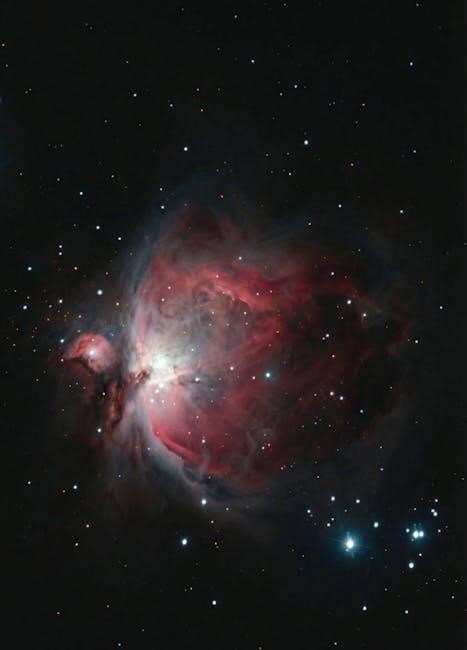
While praised for its faithfulness to the spirit of the radio series, it also received criticism for budgetary constraints impacting visual fidelity. Similar to navigating Service Canada’s automated phone system, the series sometimes struggled to fully convey the nuances of Adams’ writing. Nevertheless, it remains a fondly remembered attempt.
The Film Adaptation: A Controversial Journey
The 2005 film adaptation of The Hitchhiker’s Guide to the Galaxy proved deeply divisive among fans. Much like choosing between BlaBlaCar bus routes and train travel, audiences had strong preferences regarding how the story should be told. The film attempted a more visually expansive and comedic approach, diverging significantly from the source material’s understated humor.
Many criticized its deviation from Adams’ tone and characterizations, feeling it lost the essence of the original. Accessing information, like through Service Canada, can sometimes lead to differing interpretations. Despite commercial success, it remains a point of contention, representing a bold, yet flawed, attempt to translate the Guide to the big screen.

The Interactive Fiction Game: A New Perspective
Released in 1984, the text-based interactive fiction game offered a unique way to experience the universe of The Hitchhiker’s Guide to the Galaxy. Much like navigating travel options with BlaBlaCar – bus, train, or ride-share – players had to make choices with often unpredictable consequences. The game, co-written by Douglas Adams himself, captured the series’ absurdist humor and puzzle-solving elements.
Its notoriously difficult gameplay, demanding precise phrasing, became legendary. Obtaining assistance, similar to contacting Service Canada, often required consulting walkthroughs. This challenging experience, however, deepened engagement and provided a fresh perspective on the beloved story, allowing players to actively shape Arthur Dent’s fate.
Legacy and Influence: Why It Still Matters
The Hitchhiker’s Guide to the Galaxy continues to resonate due to its enduring satire and philosophical depth. Like BlaBlaCar simplifying European travel, Adams streamlined complex ideas into accessible humor. The series’ influence extends across science fiction, comedy, and popular culture, inspiring countless works. Its exploration of bureaucracy, mirroring frustrating experiences with services like automated Service Canada lines, remains remarkably relevant.
The Guide’s impact lies in its ability to question everything, prompting audiences to consider the absurdities of existence. This legacy is sustained by a devoted fan base, ensuring the story’s continued relevance for generations, proving its timeless appeal and intellectual stimulation.
Satire and Social Commentary
The Hitchhiker’s Guide to the Galaxy masterfully employs satire to critique societal norms and bureaucratic inefficiencies. Much like navigating complex systems such as BlaBlaCar’s travel arrangements or automated Service Canada phone lines, the series lampoons governmental red tape and the futility of seeking answers from authority. Adams skewers human arrogance and the obsession with meaning, presenting a universe indifferent to our concerns.
The Vogons embody the worst aspects of bureaucracy, while the search for the Ultimate Question highlights the absurdity of seeking definitive answers. This sharp wit, combined with philosophical pondering, elevates the work beyond mere comedy, offering a potent commentary on the human condition.
Cult Following and Fan Culture
The Hitchhiker’s Guide to the Galaxy has cultivated a remarkably devoted fan base, mirroring the reliable connections fostered by platforms like BlaBlaCar, uniting travelers across Europe. This enduring appeal stems from its unique blend of science fiction, comedy, and philosophical depth. Fans actively engage with the universe through fan fiction, conventions, and online communities, continually expanding upon Adams’s creation.
The series’ catchphrases, like “Don’t Panic!”, have become ingrained in popular culture, demonstrating its lasting impact. Much like accessing Service Canada’s automated information, fans seek deeper understanding and connection within the Guide’s expansive world, solidifying its status as a beloved cult classic.